Best Outdoor Instant Water Heater Solutions for Your Needs?
When it comes to outdoor living, comfort is key. An Outdoor Instant Water Heater can enhance your experience significantly. Imagine enjoying a hot shower after a long day of hiking or cooking meals outdoors without hassle. The convenience of immediate hot water makes a world of difference.
Choosing the best model is not always straightforward. Options vary widely, and not every unit suits every need. Factors like capacity, energy efficiency, and installation ease are critical. Some brands may market excellent solutions, but user reviews tell a different story. Reliability is essential, yet many find it challenging to identify top-tier products in a crowded market.
In this guide, we explore various Outdoor Instant Water Heater solutions tailored for different requirements. Expect insights into both high-end and budget-friendly options. A focus on real-world applications will help you make informed decisions. We aim to provide practical advice, ensuring that your outdoor experiences remain enjoyable and refreshing.
Choosing the Right Type of Outdoor Instant Water Heater
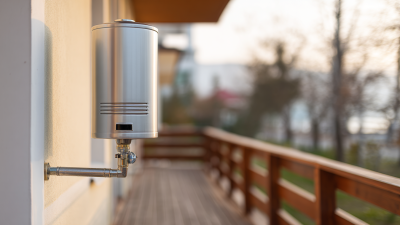
When selecting an outdoor instant water heater, several types cater to various needs. Tankless water heaters are popular. They heat water on demand, providing a continuous supply. Reports indicate that these systems can be 30% more energy-efficient than traditional heaters. This efficiency means lower utility bills, which appeals to many homeowners.
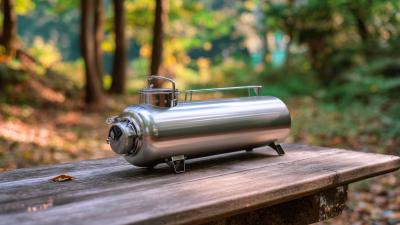
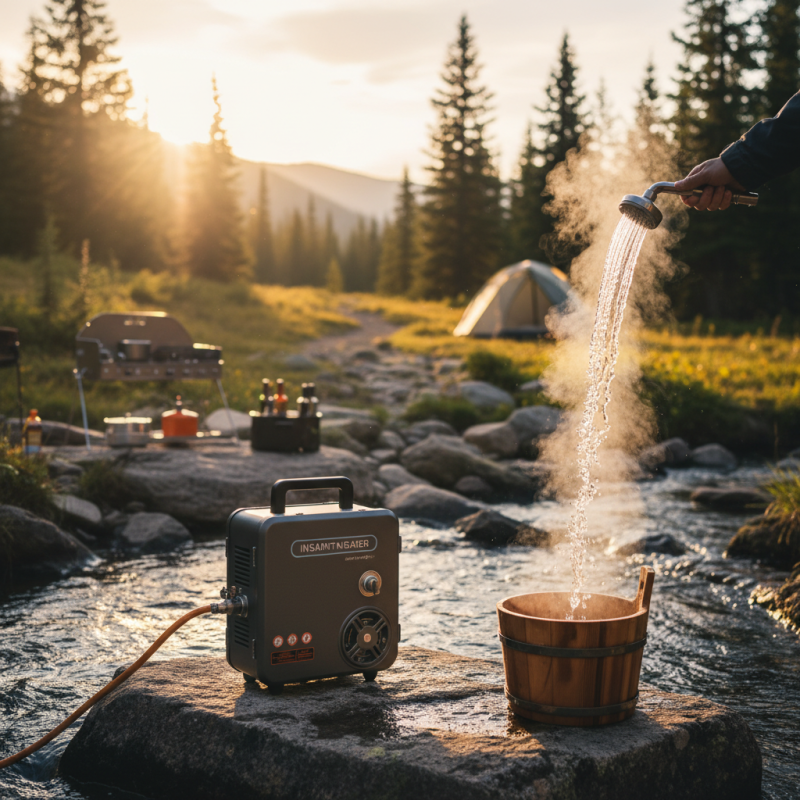
Another option is portable propane water heaters. These units are ideal for camping or outdoor events. They typically heat water quickly and are easier to transport. A recent study highlighted that portable propane heaters can generate up to 50,000 BTUs. However, portability often comes with limited water output, which may not suffice for larger gatherings.
Also worth noting are solar water heaters. These systems harness solar energy, reducing dependency on fossil fuels. They are eco-friendly but may not perform well in cloudy regions. Homeowners should assess their climate and energy needs beforehand. Many find themselves reconsidering the space and installation costs involved. Balancing benefits with potential challenges is essential for making the right choice.
Best Outdoor Instant Water Heater Solutions for Your Needs
Key Features to Consider for Outdoor Models
When choosing an outdoor instant water heater, several key features should be assessed.
Portability is essential; lightweight models allow for easy relocation.
Consider the power source as well. Some units run on propane, while others utilize electricity.
According to a 2021 energy report, propane heaters can achieve higher efficiency in outdoor conditions compared to their electric counterparts.
Water flow rate is another important factor. Most outdoor heaters provide between 2-5 gallons per minute.
But it's crucial to ensure that the unit meets your needs, especially during heavy usage. A mismatch can lead to cold showers.
Also, safety features like automatic shut-off systems are vital, providing peace of mind while in use.
Tip: Evaluate the climate in your area. In colder regions, you may need an insulated model to maintain heat efficiency.
Durability shouldn't be overlooked. Outdoor heaters are exposed to various elements. Choose models made from corrosion-resistant materials.
Warranty terms can also be telling; longer coverage often indicates reliable construction. Always read customer reviews for insights into long-term performance.
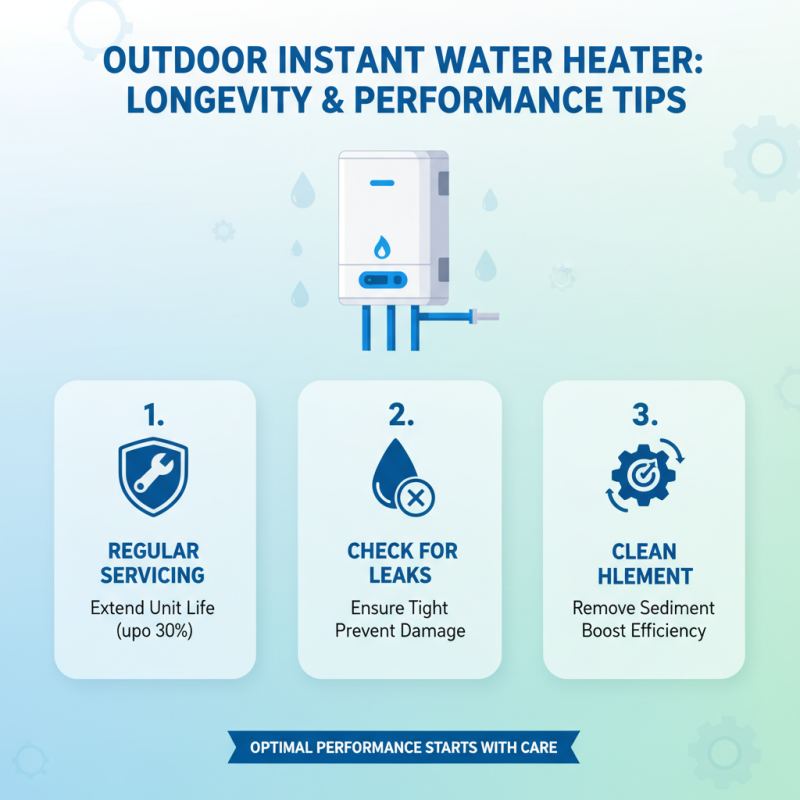
Tip: Look for units with easy maintenance options. Regular upkeep can prolong the heater's life. Remember,
even the best systems can fall short without proper care. Always stay informed and enhance your knowledge before making a purchase.
Energy Efficiency Ratings and Their Importance
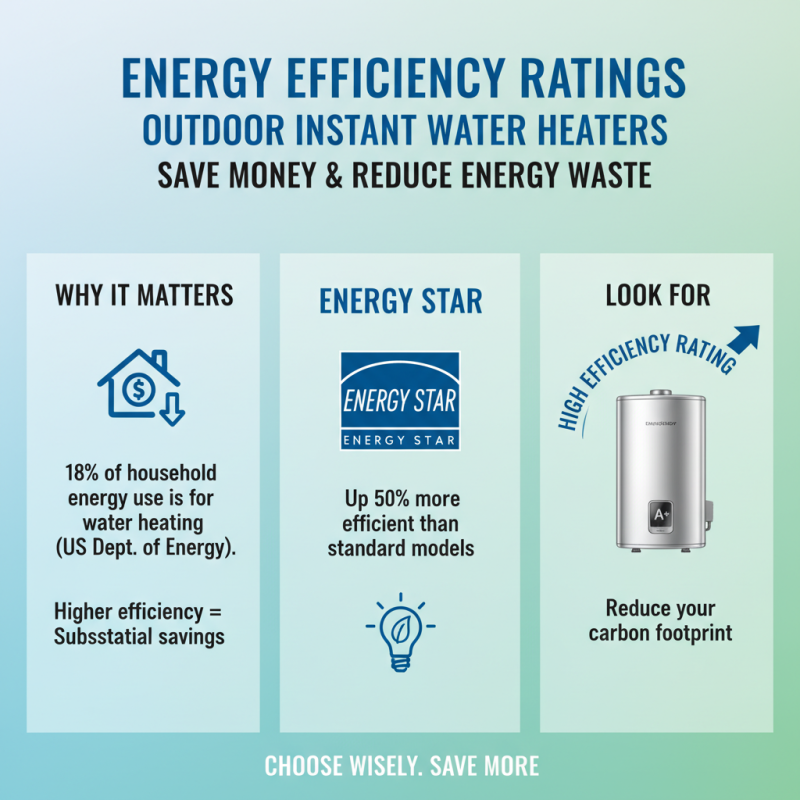
When choosing an outdoor instant water heater, energy efficiency ratings play a pivotal role. According to the U.S. Department of Energy, water heating accounts for roughly 18% of household energy use. Opting for a unit with a higher efficiency rating can lead to substantial savings on energy bills. Energy Star-rated models, for instance, can be up to 50% more efficient than standard options.
Understanding these ratings is vital for making informed decisions. The efficiency is often expressed as Energy Factor (EF). A higher EF indicates more hot water produced per unit of energy consumed. Many consumers overlook this detail. It can cost them in the long run. Additionally, efficiency may vary based on installation conditions and local climate. Therefore, it’s essential to assess your specific needs and environment.
Not all heaters will meet energy efficiency expectations. Some may underperform in cold climates. Others might not handle high demand well. Increased energy use can negate any potential savings. That’s why comprehensive research is necessary. Take the time to analyze different models and gather data to find the best fit.
Installation Options and Requirements for Outdoor Heaters
When considering outdoor instant water heaters, installation options are vital. Before purchase, assess your space. Check whether you need a wall or ground-mounted unit. Both options have pros and cons. Wall-mounted units typically save space but can be more challenging to install. Ground-mounted models are often easier to access but require more area.
Ensure proper plumbing connections are available. For gas units, access to a gas line is necessary. Electric models need a secure power source. Compliance with local codes is essential. Improper installation can lead to safety hazards. Many homeowners overlook maintenance in their planning. Regular checks can prevent malfunctions and prolong the unit's lifespan.
Installing an outdoor heater can be complex. The process may require professional assistance, especially for gas installations. Hiring a certified technician may seem costly, but it ensures safety and efficiency. Additionally, consider factors like winterization. In colder regions, draining systems before winter can prevent freezing. Reflect on these details carefully to avoid costly mistakes.
Best Outdoor Instant Water Heater Solutions for Your Needs
| Model |
Heating Capacity (BTU) |
Energy Source |
Installation Type |
Price Range ($) |
| Model A |
150,000 |
Natural Gas |
Outdoor |
300 - 500 |
| Model B |
200,000 |
Propane |
Outdoor |
400 - 600 |
| Model C |
120,000 |
Electric |
Wall-mounted |
250 - 450 |
| Model D |
175,000 |
Natural Gas |
Outdoor |
350 - 550 |
| Model E |
100,000 |
Electric |
Portable |
200 - 400 |