How to Choose the Best Indoor Water Heater for Your Home?
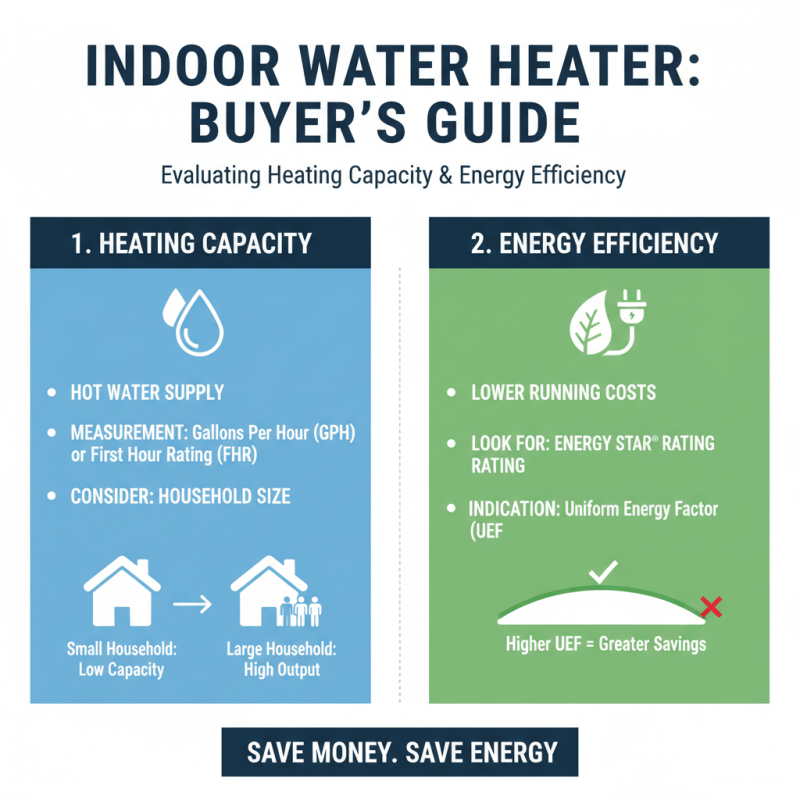
Choosing the right Indoor Water Heater is crucial for your home. A well-selected heater can provide comfort and efficiency. But the options can be overwhelming. Various factors influence your choice. The size of your home, your family's hot water needs, and energy efficiency ratings are key aspects.
Many people overlook the importance of local climate. In colder regions, a higher capacity heater may be necessary. Meanwhile, a smaller home may need a compact model. Reflecting on your daily water usage can guide your decision. Do you have long showers? Or perhaps you have high water demands during peak hours?
Ideally, a good Indoor Water Heater should balance performance and cost. However, it is easy to get caught up in features that don't match your needs. It's essential to assess your own requirements before making a purchase. A thoughtful approach will ensure your investment serves you well.
Understanding Different Types of Indoor Water Heaters Available
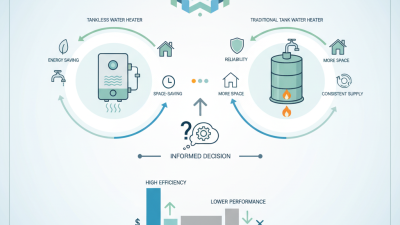
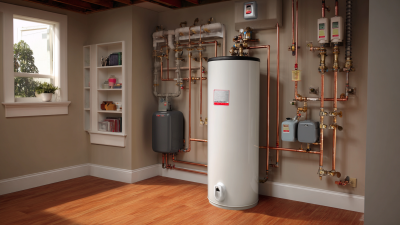
When considering indoor water heaters, it's essential to understand the different types available. Tank water heaters are the most common. They store hot water in a tank. This means you have hot water ready when needed. However, they take up considerable space and run out of hot water eventually. If your household requires a lot of hot water at once, this could be an issue.
On-demand water heaters, also known as tankless models, heat water as needed. They offer endless hot water and save space since they don’t require a storage tank. Yet, they might struggle to keep up with multiple demands simultaneously. You could find yourself waiting for hot water if multiple faucets run.
Heat pump water heaters use electricity to move heat instead of generating it. They are highly efficient, especially in moderate climates. However, they can be less effective in colder environments. Installation can also be more complex. Each type has unique pros and cons, leading to reflection on individual needs. Consider your household's typical hot water usage. This will help in making the best choice for your home.
Analyzing Costs: Purchase Price and Long-term Operating Expenses
When choosing an indoor water heater, cost is a crucial factor. The initial purchase price varies widely. Some models are affordable, while others are costly. A cheaper model may save you money upfront, but it could lead to higher long-term expenses. Reliability is key. Investing in a mid-range option might balance initial costs and longevity.
Long-term operating expenses are essential to consider. Energy efficiency plays a big role. A unit with higher efficiency ratings can lower your bills. Think about maintenance costs, too. Routine check-ups may go unnoticed, yet they can add up. An unreliable heater might cost you more with repairs and wasted energy.
Another aspect worth reflecting on is size. A heater too small won't meet your needs. Conversely, an oversized unit may lead to wasted energy. Finding the right fit is challenging, especially with varying household sizes. Do thorough research. Consider your budget, but also think about comfort and efficiency. Making the right choice now is vital for future savings.
How to Choose the Best Indoor Water Heater for Your Home? - Analyzing Costs: Purchase Price and Long-term Operating Expenses
| Type of Heater |
Purchase Price ($) |
Average Lifespan (Years) |
Annual Operating Cost ($) |
Total 10-Year Cost ($) |
| Tank Water Heater |
500 - 1,200 |
10 - 15 |
400 |
4,500 - 7,200 |
| Tankless Water Heater |
800 - 1,500 |
15 - 20 |
300 |
3,800 - 6,000 |
| Heat Pump Water Heater |
1,200 - 2,500 |
10 - 15 |
250 |
3,200 - 5,500 |
| Solar Water Heater |
3,000 - 5,000 |
20 - 25 |
200 |
5,000 - 8,000 |
Reviewing Maintenance and Durability for Long-term Reliability
When selecting an indoor water heater, maintenance and durability are crucial. Regular upkeep can ensure efficiency and safety. Check the manufacturer's guidelines for maintenance requirements. Flushing the tank periodically can prevent sediment buildup. This buildup can cause damage and reduce heating efficiency over time.
Durability is often tied to the material quality. Stainless steel tends to offer better resistance to corrosion. However, not all stainless steel is alike; some may still weaken over time. It’s essential to understand these differences. Inspect the warranty as a reflection of the manufacturer’s confidence in their product. Some warranties cover parts for only a few years, while others may last decades.
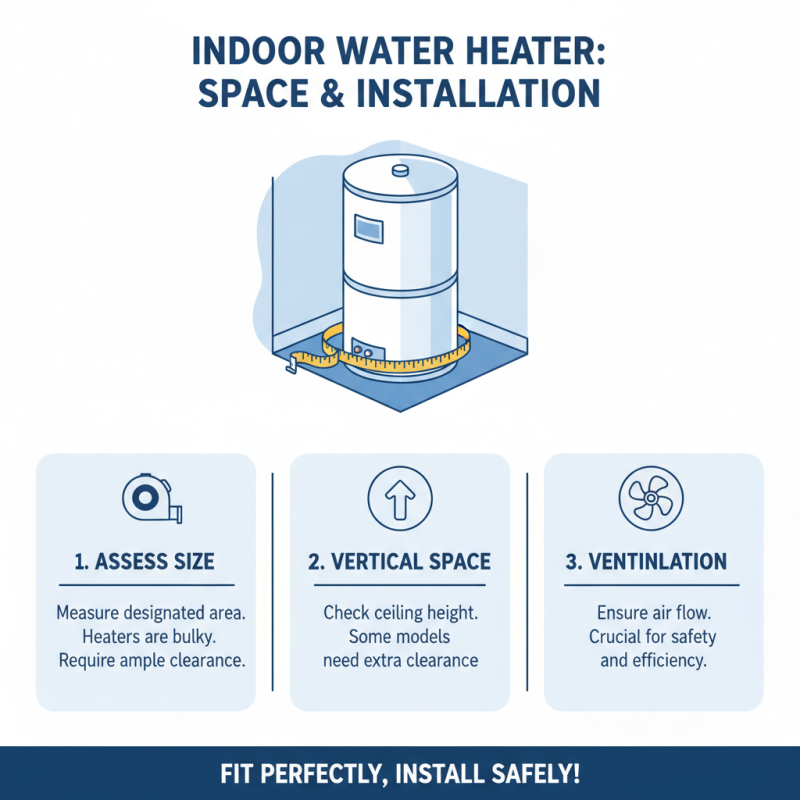
Consider the installation location too. A poorly ventilated space can lead to moisture problems. Condensation may create a breeding ground for mold or rust. Check the warranty coverage and think about potential environmental factors. Reflect on your choice before finalizing your selection.