How to Choose the Best Tankless Water Heater for Your Home in 2025
The demand for energy-efficient appliances has surged in recent years, and the Tankless Water Heater market is no exception. According to a recent report by Grand View Research, the global tankless water heater market size was valued at $1.5 billion in 2020 and is projected to expand at a compound annual growth rate (CAGR) of 23.5% from 2021 to 2028. This growth is driven by an increasing focus on renewable energy sources, rising energy costs, and a growing consumer preference for appliances that offer both efficiency and convenience.
Choosing the right Tankless Water Heater for your home in 2025 requires careful consideration of various factors, including energy efficiency ratings, flow rates, and installation costs. With advancements in technology, modern tankless units can provide unlimited hot water while occupying minimal space, making them an attractive alternative to traditional tank heaters. Additionally, the U.S. Department of Energy has reported that tankless water heaters can be 24%-34% more energy-efficient than conventional models, particularly for homes that consume less than 41 gallons of hot water daily.
As homeowners increasingly prioritize sustainability and long-term savings, understanding the key features and benefits of tankless water heaters will empower you to make an informed decision tailored to your household needs. Whether upgrading an existing system or installing a new one, selecting the best Tankless Water Heater can significantly impact both your energy bills and environmental footprint in the years to come.
Factors to Consider When Choosing a Tankless Water Heater
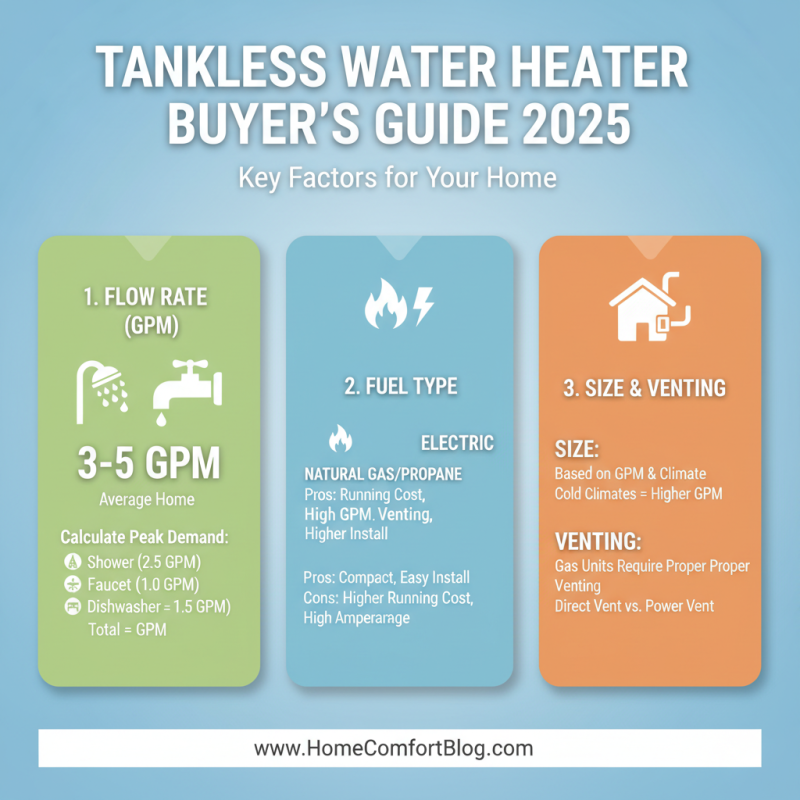
When choosing a tankless water heater for your home in 2025, several key factors should be taken into account. First and foremost, consider the flow rate, which is measured in gallons per minute (GPM). This metric indicates how much hot water the unit can provide simultaneously. Calculate your household's peak hot water demand by adding up the GPM required for all fixtures that may be used at the same time, such as showers, sinks, and appliances.
Another critical factor is the heater's energy efficiency. Look for models with high energy factor (EF) ratings, as they consume less energy and can save you money on utility bills in the long run. Additionally, consider the energy source—gas versus electric. Gas models typically offer a higher flow rate and can be more cost-effective for larger households, while electric units may be easier to install and ideal for smaller spaces.
**Tips:** It's wise to consult with a professional plumber or HVAC expert to assess your home’s specific needs and installation challenges. Furthermore, before making a choice, read customer reviews and seek out warranties that protect your investment. Taking these steps will help ensure you select the best tankless water heater tailored to your family's requirements.
Understanding the Different Types of Tankless Water Heaters
When considering a tankless water heater for your home in 2025, it's essential to understand the different types available in the market. The two primary types are electric and gas-powered tankless water heaters. Electric models are often favored for their compact size and ease of installation. According to the U.S. Department of Energy, electric tankless water heaters can be up to 99% energy-efficient, making them a great option for smaller homes or apartments. However, their flow rate might be limited, typically around 3 to 5 gallons per minute (GPM), which could be a concern for larger households with higher hot water demands.
On the other hand, gas tankless water heaters generally offer higher flow rates, making them suitable for larger homes. These models can provide approximately 5 to 10 GPM, depending on the size and configuration. A report from the American Gas Association indicates that gas models can also be more cost-effective in the long run due to lower operating costs, especially in areas with lower natural gas prices. However, they require proper ventilation and a gas line connection, which could complicate installation. Thus, weighing energy efficiency, installation requirements, and hot water demand is crucial in choosing the right tankless water heater for your specific needs.
Evaluating Energy Efficiency Ratings and Costs
When selecting a tankless water heater for your home in 2025, energy efficiency ratings and costs should be your primary focus. Energy-efficient models can significantly reduce your utility bills while minimizing your environmental footprint. Look for units that come with ENERGY STAR certifications, as these indicate that they meet strict efficiency guidelines. The long-term savings from higher efficiency can offset the initial purchase price, making the investment worthwhile.
Tips: Consider the size of your household when evaluating capacity. Higher flow rates may be needed for larger families, while smaller households can benefit from compact models. Additionally, check for available rebates or incentives for energy-efficient appliances in your area, as these can lower your overall costs.
Also, assess the operational costs associated with different fuel types, whether gas or electric. For instance, electric tankless heaters might have lower upfront costs but could lead to higher electricity bills, especially in areas with high residential electricity rates. Balancing efficiency with fuel costs can lead to better long-term savings and comfort in your home.
Energy Efficiency Ratings of Tankless Water Heaters (2025)
This bar chart illustrates the energy efficiency ratings of various tankless water heaters for the year 2025. Each model is rated by its Energy Factor (EF), indicating its energy efficiency. Higher EF values represent more efficient models, which can lead to savings on energy costs over time.
Installation Requirements and Space Considerations
When selecting a tankless water heater for your home, it’s crucial to consider installation requirements and the space available. First, assess the existing plumbing and electrical systems. Most tankless heaters require a specific gas line size or electrical capacity to function efficiently. If your home relies on electric heating, ensure that your electrical panel can handle the additional load, as these units often require substantial power. For gas units, check the venting requirements, as certain models may need more extensive ducting to expel exhaust gases safely.
Space considerations are equally important. Tankless water heaters are more compact than traditional tank models, allowing flexibility in installation locations. However, it’s essential to account for clearance around the unit for maintenance and airflow. If your home has limited space, look for models designed for tight areas, such as wall-mounted units. Additionally, consider the proximity to water usage points. A system installed closer to the points of use can improve efficiency and reduce wait times for hot water, ultimately enhancing your home's energy efficiency and convenience.
How to Choose the Best Tankless Water Heater for Your Home in 2025 - Installation Requirements and Space Considerations
| Feature |
Standard Unit |
High-Efficiency Unit |
Space Requirements |
| Flow Rate (GPM) |
2.5 - 3.5 |
3.5 - 5.0 |
Wall-mounted with 12” clearance |
| Energy Efficiency Rating |
80% - 85% |
90%+ |
Requires venting space |
| Typical Installation Cost |
$1,000 - $1,500 |
$1,500 - $2,500 |
Requires access to gas/electric supply |
| Lifespan |
10 - 15 years |
15 - 20 years |
Compact designs for tight spaces |
| Water Temperature Rise |
70°F - 120°F |
60°F - 140°F |
Proper piping needed |
Top Brands and Models to Explore in 2025
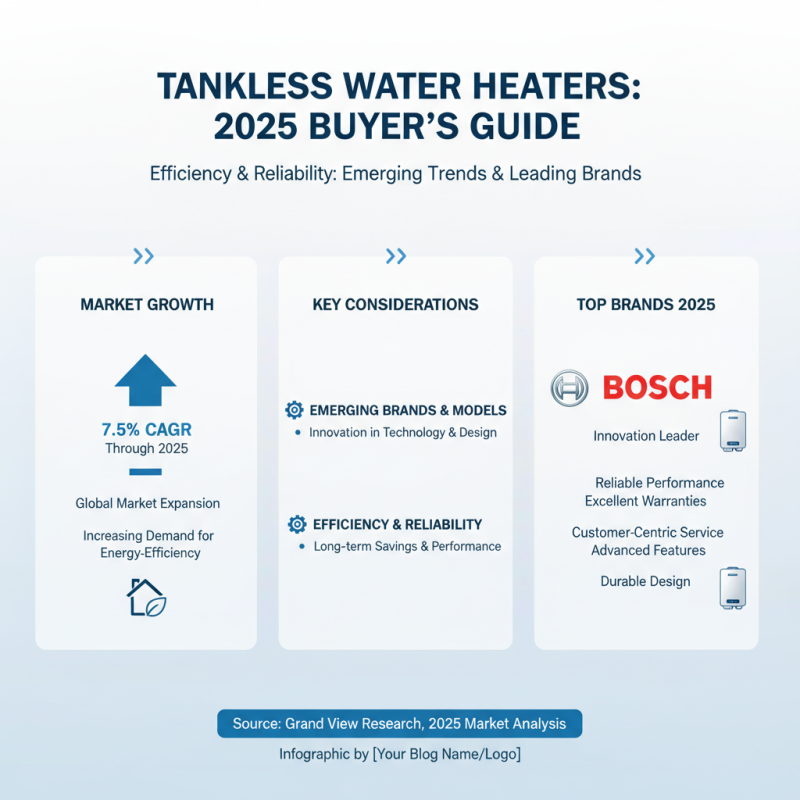
When selecting a tankless water heater in 2025, homeowners should consider emerging brands and models known for their efficiency and reliability. According to the latest market analysis from Grand View Research, the global tankless water heater market is projected to grow at a CAGR of 7.5% through 2025, which highlights the increasing demand for these energy-efficient options. Notable brands like Rinnai and Bosch are leading the way with innovations in technology and design, providing excellent warranties and customer service.
Among the top models to explore, the Rinnai RU199iN stands out for its high flow rate and energy efficiency, boasting an Energy Factor (EF) rating of 0.93, which translates to significant cost savings on utility bills. Similarly, the EcoSmart ECO 27 is praised for its advanced self-modulating technology, which ensures optimal heating based on demand, significantly reducing energy consumption. As the market evolves, considering brands and models with strong performance reviews and energy certifications will help homeowners make informed decisions that enhance comfort and savings in their households.