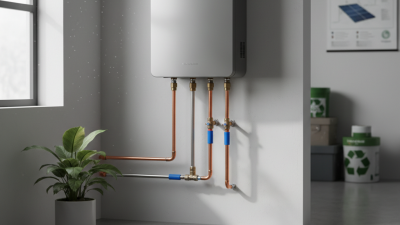
What is an Outdoor Instant Water Heater and How Does It Work Guide
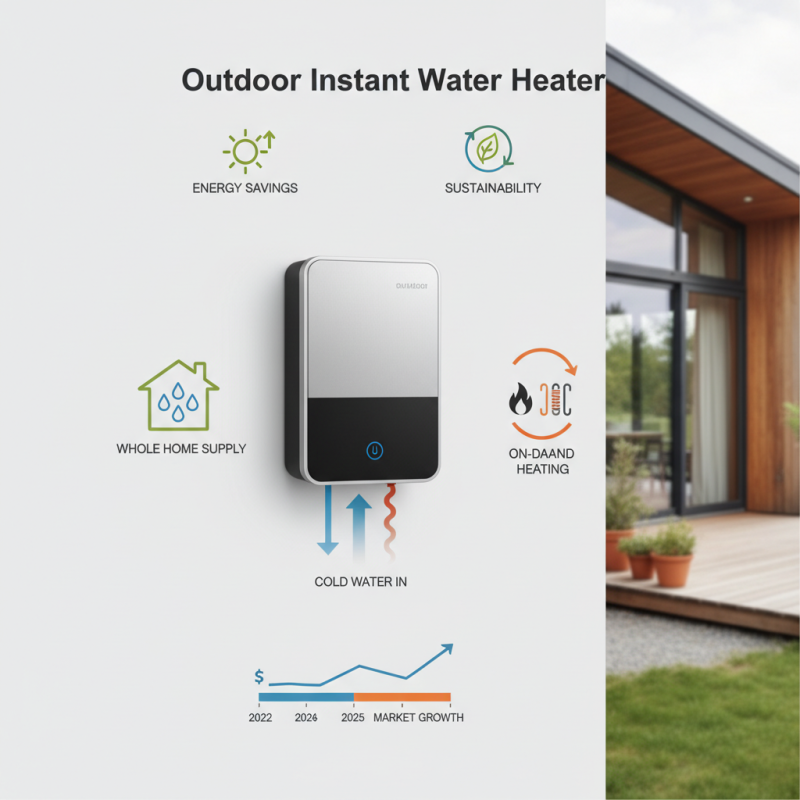
As the demand for efficient and reliable water heating solutions increases, outdoor instant water heaters have emerged as a game-changer in the plumbing industry. These devices heat water on demand, eliminating the need for storage tanks and offering energy savings of up to 30%, according to the Department of Energy's 2022 report on energy-efficient appliances. With a growing market projected to reach USD 3 billion by 2025, outdoor instant water heaters are becoming a staple for homeowners seeking convenience and sustainability.
Expert insights shed further light on the relevance of this technology. Dr. Emily Carter, a prominent researcher in hydronic heating systems, notes, "The potential for outdoor instant water heaters to revolutionize residential hot water supply hinges on their efficiency and compact design, making them ideal for any home." Her observations highlight not only the innovation behind these systems but also their vital role in promoting energy-conscious lifestyles.
In this guide, we will explore the mechanisms of outdoor instant water heaters, their benefits, and how they integrate seamlessly into modern living spaces. Understanding how these heaters function is crucial for homeowners considering an upgrade to their water heating systems, ensuring they make informed choices that contribute positively to both their comfort and the environment.
Definition of Outdoor Instant Water Heater
An outdoor instant water heater is a type of heating appliance designed to provide hot water on demand for outdoor uses, such as gardening, washing cars, or other outdoor cleaning tasks. Unlike traditional storage water heaters that preheat and store hot water, instant water heaters heat water directly as it flows through the unit. This method avoids the standby heat loss associated with stored hot water, making them a more energy-efficient option, particularly for outdoor settings where hot water usage may be sporadic.
According to industry reports, the demand for instant water heaters has surged in recent years, with a projected growth rate of over 7% annually in the outdoor heating market. This rising interest can be attributed to the increasing emphasis on energy efficiency and the convenience offered by on-demand hot water. Outdoor instant water heaters typically operate using gas or electricity, and they can deliver hot water at a rate of 3 to 8 gallons per minute, depending on the model and source of energy. This efficiency not only meets the functional needs of users but also aligns with sustainable practices by reducing overall energy consumption and greenhouse gas emissions associated with water heating.
Key Components of Outdoor Instant Water Heaters
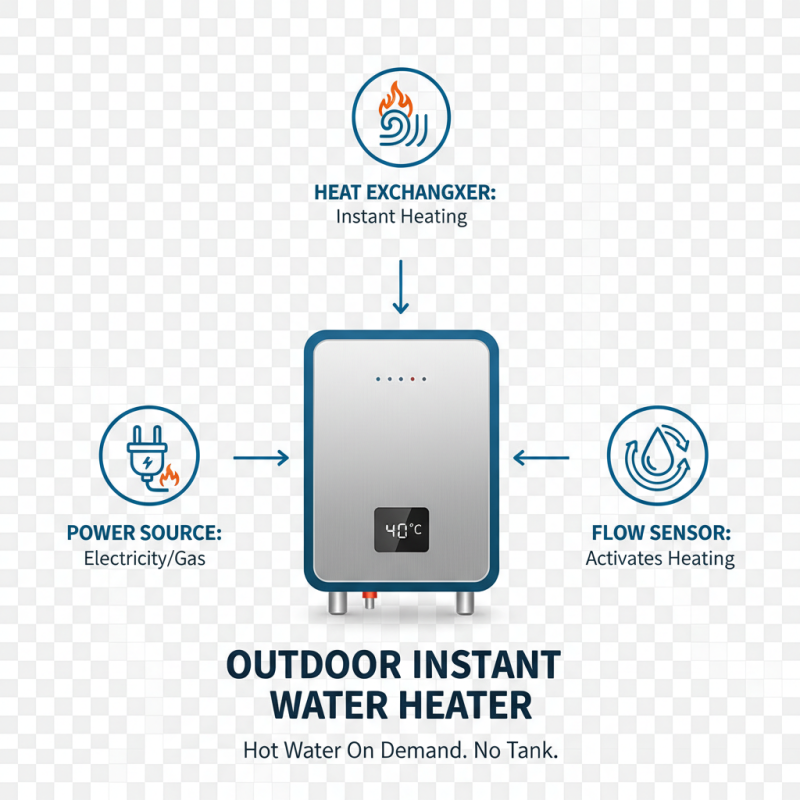
Outdoor instant water heaters, known for their convenience and efficiency, consist of several key components that enable them to function effectively. The main parts include a heat exchanger, a power source, and a flow sensor. The heat exchanger is crucial, as it heats the water instantly when it flows through the unit. This allows for hot water on demand without the need for a bulky storage tank. The power source, typically either electricity or natural gas, provides the necessary energy to heat the water rapidly. Lastly, the flow sensor detects when water is being drawn, activating the heating mechanism to ensure a consistent supply of hot water.
When selecting an outdoor instant water heater, it's vital to consider the size of the unit in relation to your specific hot water needs. A unit with insufficient capacity may struggle to meet your demands, especially during peak usage times. **Tip:** Assess your household's hot water requirements by considering multiple simultaneous usages, like showers or washing machines, to ensure optimal performance.
Maintenance is another essential aspect of ensuring longevity and efficiency. Regularly flushing the unit can help prevent mineral buildup, and checking the power source connection ensures safety and reliability. **Tip:** Set a seasonal reminder for maintenance checks to avoid any surprises during peak usage times, ensuring your outdoor instant water heater consistently delivers hot water when you need it.
How Outdoor Instant Water Heaters Function
Outdoor instant water heaters, also known as tankless water heaters, operate by heating water on demand rather than storing it in a tank. This system is designed to provide consistent hot water for outdoor use, such as in gardens, patios, or during outdoor events. When a hot water tap is opened, cold water travels through a pipe into the unit. A powerful heating element or gas burner is activated, quickly warming the water as it flows through the heater. This process ensures that users receive hot water almost instantly, eliminating the wait time associated with traditional tank systems.
The efficiency of outdoor instant water heaters lies in their compact design and energy-saving technology. Unlike conventional heaters that continuously heat and store water, these units only use energy when hot water is needed. This not only reduces energy consumption but also makes them suitable for various outdoor applications, including showers, sinks, and washing stations. Additionally, many models come with built-in safety features such as flame modulation and overheating protection, ensuring safe operation even in demanding conditions.
Outdoor Instant Water Heater Energy Consumption Comparison
This chart displays the monthly energy consumption of different types of outdoor instant water heaters. Electric heaters typically consume the most energy, while solar heaters provide a more energy-efficient solution.
Advantages of Using Outdoor Instant Water Heaters
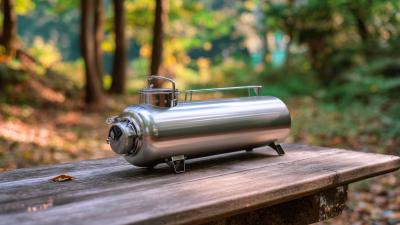
Outdoor instant water heaters are becoming increasingly popular for their convenience and efficiency. One of the primary advantages of these heaters is that they provide hot water on-demand, eliminating the need for a storage tank. This means you can enjoy hot water whenever you need it without waiting for the tank to heat up, making them ideal for outdoor activities like camping or for installations where space is limited.
Another significant benefit of outdoor instant water heaters is their energy efficiency. Traditional water heaters consume energy continuously to keep water hot, even when it’s not in use. In contrast, instant water heaters only use power when you turn on the hot water tap. This not only reduces energy consumption but also lowers your utility bills over time. Additionally, many models offer adjustable temperature settings, allowing users to customize the water temperature to their preference.
Tips: When choosing an outdoor instant water heater, consider the water flow rate and the required temperature rise for your specific needs. It's also essential to ensure that the unit is suitable for outdoor use, with proper weatherproofing and durability. Regular maintenance, including descaling and ensuring proper ventilation, can prolong the lifespan of your heater and ensure consistent performance.
Installation and Maintenance Tips for Outdoor Instant Water Heaters
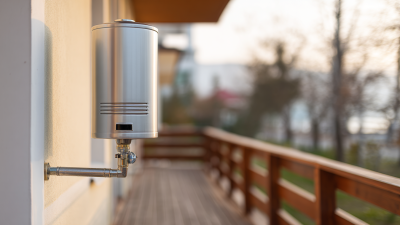
Installing an outdoor instant water heater requires careful planning and attention to detail to ensure safety and optimal functionality. First, it’s important to select a solid location that is well-ventilated and away from flammable materials. The unit should be mounted securely, typically on a wall or stand that can withstand the outdoor elements. Additionally, ensure that water and gas connections are easily accessible for maintenance. Follow the manufacturer’s guidelines for spacing requirements and installation procedures to prevent any potential hazards and maximize efficiency.
Regular maintenance is crucial for keeping your outdoor instant water heater in good working condition. Begin with periodic inspections of the unit for rust, corrosion, or signs of wear. Flushing the heater every few months can help remove sediment buildup that may affect performance. Additionally, check the connections for leaks and tighten any loose fittings. It's also advisable to have a professional service check the appliance annually to ensure that all components are functioning correctly and safely. Clean filters and burners as needed to maintain efficiency, and follow any specific maintenance recommendations provided by the manufacturer.
What is an Outdoor Instant Water Heater and How Does It Work Guide - Installation and Maintenance Tips for Outdoor Instant Water Heaters
| Feature |
Description |
| Type |
Outdoor Instant Water Heater |
| Function |
Provides on-demand hot water without storage |
| Energy Source |
Electricity or Gas |
| Typical Installation Location |
Outdoors, usually attached to an external wall |
| Installation Requirements |
Professional installation recommended; proper ventilation for gas units |
| Maintenance Tips |
Regular descaling, checking for leaks, ensuring proper ventilation |
| Lifespan |
Typically 10-15 years with proper maintenance |
| Cost Range |
$150 - $1,500 depending on capacity and features |