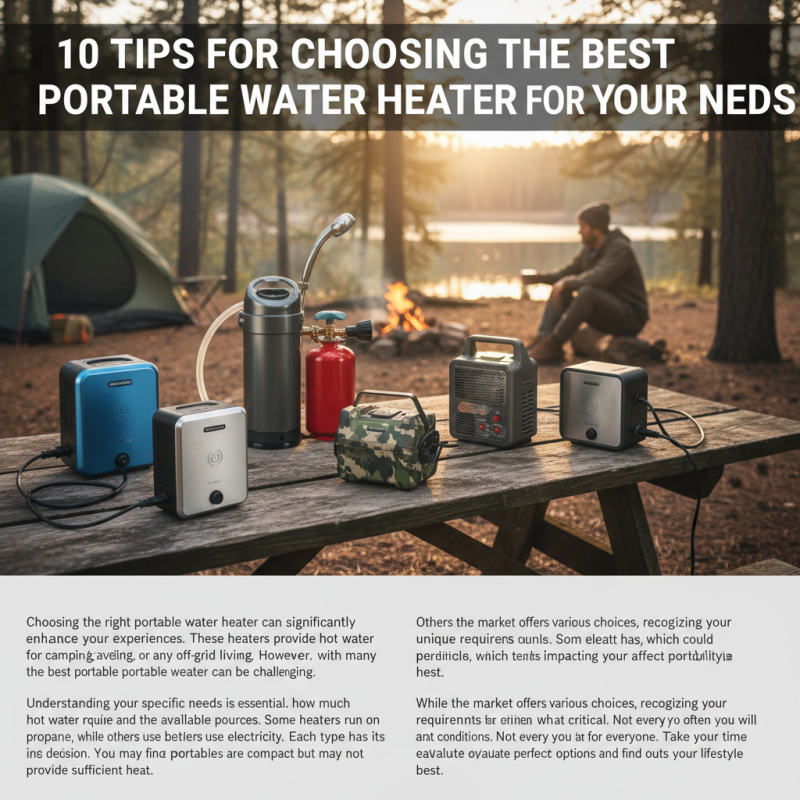
Choosing the right portable water heater can significantly enhance your outdoor experiences. These heaters provide hot water for camping, traveling, or any off-grid living situation. However, with many options available, selecting the best portable water heater can be challenging.
Understanding your specific needs is essential. Consider how much hot water you require and the available power sources. Some heaters run on propane, while others use electricity. Each type has its benefits and limitations, impacting your decision. You may find some portable water heaters are compact but may not provide sufficient heat. Others might be powerful yet bulky, which could affect portability.
While the market offers various choices, recognizing your unique requirements is critical. Reflect on how often you will use it and in what conditions. Not every portable water heater is perfect for everyone. Take your time to evaluate options and find one that suits your lifestyle best.
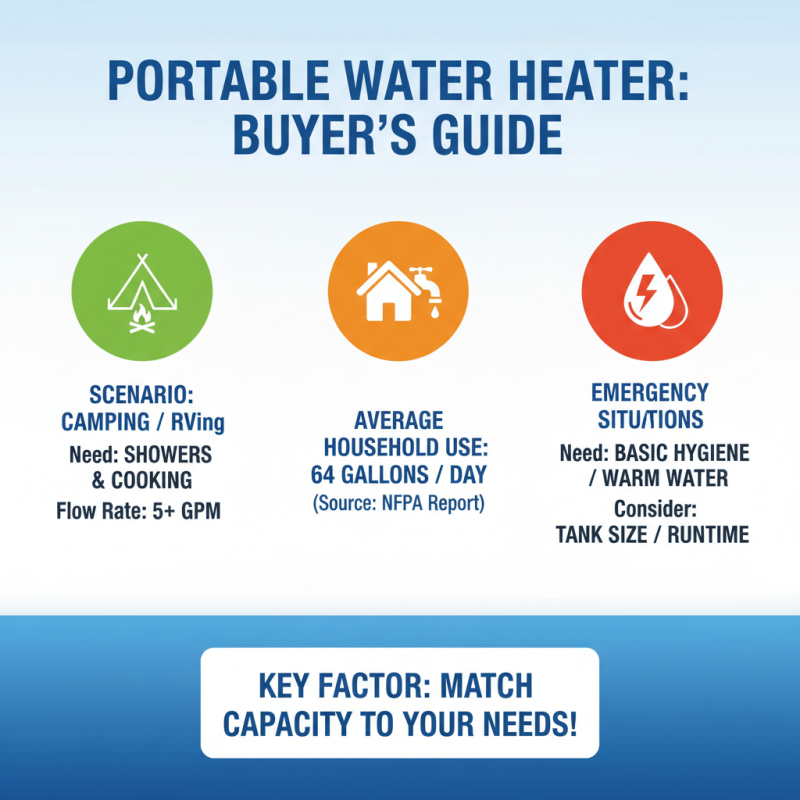
When choosing a portable water heater, understanding your specific water heating needs is crucial. Different scenarios influence these needs. For instance, camping, RVing, or emergency situations each require different heating capacities. According to a recent report from the National Fire Protection Association, the average household uses about 64 gallons of water daily. This statistic can guide you in assessing the heater's capacity. If you need hot water for showers and cooking while camping, a model with at least 5 gallons per minute (GPM) flow rate is advisable.
Consider heating time as well. Many portable heaters can take from 10 to 30 minutes to achieve the desired temperature. However, if the water temperature fluctuates, you may need a more robust model. A survey from the Electric Heating Association found that 70% of users reported insufficient hot water when using lower-capacity units. This highlights the necessity of matching the heater's capability with your intended usage. Assessing your actual needs helps minimize frustrations with insufficient heating, leading to a more enjoyable experience during your water heating scenarios.
When choosing a portable water heater, understanding energy sources is vital. Gas and electric heaters each have unique benefits and drawbacks. Gas heaters often heat water faster and provide a continuous supply. However, they require a propane tank or natural gas source. This can make them less convenient in some locations.
Electric heaters are typically easier to use. They only need to be plugged in. Yet, they may not heat water as quickly or sustain high demand as well. The availability of electric outlets can also limit their use. Consider your specific needs, lifestyle, and the environments where you plan to use the heater.
Think about efficiency, safety, and long-term costs. Gas heaters can be more affordable upfront but may incur higher fuel costs over time. Electric models usually have lower maintenance but could raise your electric bill. Balancing these factors is important for making an informed choice. Reflect on your priorities before deciding.
When selecting a portable water heater, size is a critical factor. It dictates how easily you can transport the unit. A compact design may fit well in your vehicle, but could limit your usage. Think about where you'll use it. For camping trips, a small heater might suffice. However, larger gatherings may need a more substantial option.
Capacity is equally important. This determines how much hot water you can access at once. A heater with low capacity may not meet your needs. Imagine waiting for water to heat again while everyone else is ready for a shower. In contrast, a higher capacity model ensures everyone gets what they need. Still, a too-large unit might be cumbersome.
Flow rate measures how fast hot water is produced. A high flow rate can make showering or cleaning more efficient. But sometimes, this comes at the cost of energy consumption. If you enjoy long showers, a model with a higher flow rate could be the answer. Yet sometimes, it leads to quick depletion of hot water. Balancing flow rate with other features is crucial. Understanding your specific needs will ensure the best decision.
When choosing a portable water heater, safety should be a top priority. Look for models that have clear certifications. They ensure the heater meets safety standards. Check for labels indicating compliance with industry regulations. This can help you avoid potential hazards such as overheating or leaks.
Consider the design and materials used. Some heaters may use plastics that can melt or release toxins when heated. Metal constructions often provide better durability. Read product reviews to see if others experienced safety issues. Many models can heat water rapidly, but that can come with risks too. Overheating can cause burns.
Lastly, think about the automatic shut-off feature. It is crucial in preventing accidents. If the water reaches a dangerous temperature, the heater should turn off. Make sure to thoroughly read the user manual. Familiarizing yourself with safety measures is essential. Ignoring these details can lead to serious consequences. Always prioritize safety over convenience.
| Tip | Description | Safety Considerations | Certifications |
|---|---|---|---|
| 1. Determine Your Hot Water Needs | Assess how much hot water you typically consume to choose the right capacity. | Overcapacity can lead to risks of overheating. | Look for CSA or UL certifications. |
| 2. Portability | Choose a lightweight and compact model for easy transport. | Ensure it has safe carrying handles to prevent accidents. | Check for approved usage in specific environments. |
| 3. Energy Efficiency | Look for heaters with high energy efficiency ratings to save on costs. | A higher efficiency often means safer, cooler operation. | Energy Star ratings indicate efficiency standards. |
| 4. Fuel Type | Consider gas, electric, or solar water heaters based on your access to fuel. | Always follow manufacturer guidelines for safe fuel storage. | Check for necessary safety and emissions certifications. |
| 5. Temperature Control | Look for models with adjustable temperature settings for comfort and safety. | Avoid scalding by using controlled temperature settings. | Compliance with local safety standards. |
| 6. Maintenance Requirements | Choose a model that is easy to maintain to ensure safety and longevity. | Regular maintenance can prevent leaks and malfunctions. | Ensure parts are compliant with safety standards. |
| 7. Reviews and Ratings | Check user reviews for real-world performance and safety experiences. | Avoid models with reported safety issues. | Third-party reviews can help confirm safety certifications. |
| 8. Budget Considerations | Set a budget that balances quality with affordability. | Investing in quality can reduce safety risks in the long run. | Ensure budget options meet all safety certifications. |
| 9. Warranty and Support | Select a product that offers a solid warranty and customer support. | A good warranty can indicate confidence in safety. | Warranty details should clarify safety compliance. |
| 10. Brand Reputation | Research the manufacturer's reputation for reliability and safety. | Brands with good safety records reduce potential hazards. | Trustworthy brands are more likely to comply with industry standards. |
When choosing a portable water heater, budgeting plays a crucial role. Prices vary widely based on features and capacity. Some models are more affordable upfront, but hidden costs may arise later. Consider not just the purchase price but also installation and maintenance expenses. A seemingly cheap option might drain your wallet in the long run.
Long-term operating costs are often overlooked. Check energy efficiency ratings. They affect your monthly bills directly. A unit with a higher efficiency might be more expensive initially but saves money over time. Think about usage patterns, too. Frequent travelers may benefit from a model designed for high efficiency. On the other hand, infrequent users might not need to spend a fortune.
Remember that your specific needs shape these choices. Reflect on how often you’ll use the heater and where. A camping trip requires a different approach than home use. Sometimes, the best decision combines price and practicality. Being aware of both immediate and lasting expenses can steer you toward a more informed choice.